A Day to Pause and Reflect: Service Is a Sure-footed Path to Justice


MLK Day of Service 2017

In honor of the late civil rights leader, Community College of Philadelphia students and staff took part in the Martin Luther King (MLK) Day of Service on January 16, 2017, at Girard College — a city-wide signature event.

Nearly 5,000 volunteers from organizations across the city took part in 250 service projects throughout the day. Elected officials also attended, and Philadelphia Mayor Jim Kenney and Gov. Tom Wolf spoke to the crowd. College President, Dr. Donald Guy Generals, and Vice President for Strategic Initiatives and Chief of Staff, Dr. Judith Gay, led the volunteers from the College, including 13 student ambassadors and two student government leaders.

Student ambassadors came up with the ideas for the six projects that were used during the event. A number of them worked for months ahead of the day of service, as they had to consider their works’ impact, timeliness and inclusiveness.

Volunteers who dropped by the College’s student-manned table had their choice of activities: some wrote Valentine’s Day cards for seniors and decorated socks for them; others wrote letters of thanks to President Obama for his service; while others created coloring books of famous Philadelphians, shared peace bracelets and left a one-word message of kindness on a peace wall.

Shalee Hill, a student ambassador project leader, said she enjoyed watching the young people in the crowd practicing the tenets of exemplary citizenship and interacting with diverse neighbors.

“I learned that across the racial and religious gamut people can help for the sole purpose of serving others,” said Hill, citing the example of a Muslim women she met who visited the College’s table and wrote many cards.

On a personal level, the peace wall was Hill’s favorite activity. “I wrote like 10 words on the peace wall,” Hill exclaimed. “I was so excited about this wall; I kept writing.”

Jenavia Weaver, coordinator of the Student Leadership and Involvement Center, has organized the MLK Day of Service at the College for the last 15 years. Upon an invitation from Girard College, she and other members of Community College of Philadelphia have been participating at the city's signature site for service for the last 7 years. This year, the Student Ambassador program, the Student Government Association and Phi Theta Kappa Honor Society each provided student representatives.

"We do it because we understand what service means," said Weaver during an interview she did with a Philadelphia Inquirer reporter. "If we could all do a little more service for others, the world would be a better place.”

Hill echoed a similar thought, insisting that she carries lessons of love and service from the experience to her family and neighborhoods.

“If you have a service attitude, you want solve problems,” Hill noted. “I like to serve because what I get out of it in return is more than what I give.”

By day’s end at Community College Philadelphia table, more than 100 socks were decorated, nearly 200 Valentine’s Day cards were written and 150 personalized letters with messages were ready to go to President Obama to thank him for his eight years of service.

Many seniors at the nearby Watermarks Retirement Community received a package composed of a card, sock and handmade bracelet.

Summary
In honor of the late civil rights leader, Community College of Philadelphia students and staff took part in the Martin L…
Publish Date
Feb 14, 2017
Original nid
2504

Black History Month Celebration in Full Swing at Community College of Philadelphia


Sulaiman Rahman, founder and CEO of Urban Philly Professional Network, speaks at the African American History Month breakfast.

Community College of Philadelphia kicked off its African American History Month celebration on Wednesday, Feb.1, with a breakfast at the Great Hall. President Donald Guy Generals and Sulaiman Rahman, founder and CEO of Urban Philly Professional Network, related storied achievements of the past to emerging issues of today, like immigration.

With the Trump administration’s recent travel ban of seven predominantly Muslim countries, Dr. Generals reminded the audience that African Americans’ gifts to the world have been their spirit of liberation and resistance.

"We have the obligation to take the legacy we are celebrating here during African American Heritage Month to embrace their cause; and find ways to advance their cause, while they’re trying to liberate themselves from the types of hostility thrown against them,” he said.

Rahman inspired students to reach for uncommon achievements, in the community and in the classroom. “You are me, and I am you” he said, reflecting on his shared experiences with students hoping to follow in his footsteps.

Rahman, a “C” student until the 7th grade, eventually realized that his football skills alone were insufficient in achieving his future goals. “If I wanted to achieve my goals, I needed to make sure that I took things seriously in class,” he said.

As he played football in high school, he simultaneously developed a deep love for math and science. Upon graduation, top universities competed to have him at their campuses, including Columbia University and the University of Pennsylvania. He chose to attend Penn, where he studied engineering, played football, and was drawn to the intrigue of entrepreneurship.

College helped him to discover his purpose, which was to launch UrbanPhilly.com to engage, empower and connect future leaders in Greater Philadelphia using technology and events. Currently, more than 16,000 people have subscribed his website. He also serves on the board of the Community College of Philadelphia Foundation, which enhances and enriches the educational experiences for students by providing external resources to support the College’s mission.

While traveling across the country, Rahman said he has discovered that people are the same in their aspirations, and that diversity has value. He cited the power of mind and imagination in envisioning a future, then urged students and staff — “to not just be a human being but a human becoming.”

With a vision and preparation, he said, people can become a leader in any given field. He added that when people have high expectations of themselves, it propels them forward. “How you do anything is how you do everything,” he exclaimed.

He encouraged students to make use of all the College’s resources and support services; and to strive to expand their network. “Be uncommon,” he urged students, and “seek opportunity not security.”

Ramean Clowney, a student, said Rahman is the ideal image of Black success to him. “This guy is phenomenal,” he said. “I learned from his life that it doesn’t matter where you started; it’s all about where you’re going — taking every opportunity for what it’s worth.”

Clowney also appreciated Dr. Generals’ words.

“I really like his leadership here at Community College of Philadelphia,” he mentioned. “It was just moving for me.”

Summary
Community College of Philadelphia kicked off its African American History Month celebration on Wednesday, Feb.1, with a …
Publish Date
Feb 13, 2017
Original nid
2503

Carole Haas Gravagno: Compassionate Citizenship in Action


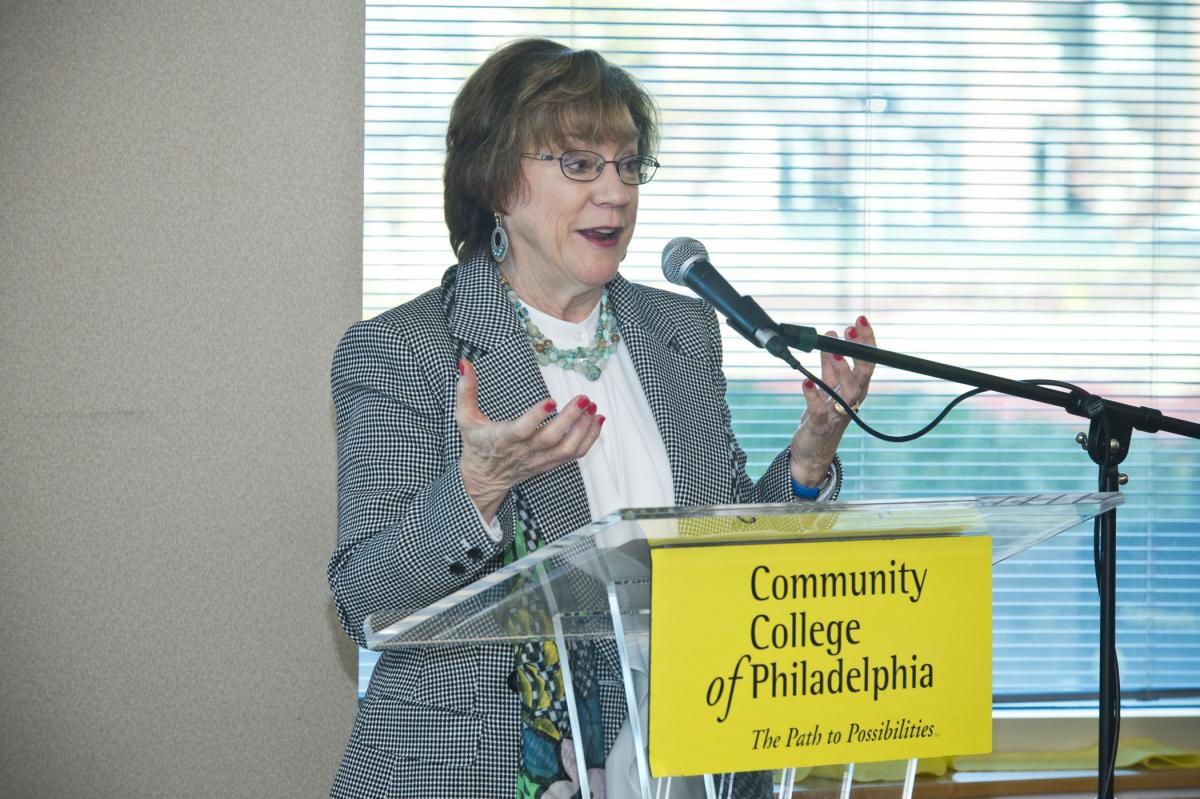
 Carole Haas Gravagno delivers remarks during the Community College of Philadelphia's  2016 Judge Edward R. Becker Citizenship Award breakfast.

For Carole Haas Gravagno, responsible citizenship simply doesn’t mean living purposefully as an engaged, duty-bound member of society. Above all else, good citizenship requires compassion.

Delivering remarks focusing on challenges and solutions to bettering life in the Philadelphia region, Gravagno made the case for compassionate citizenship at the College’s 2016 Judge Edward R. Becker Citizenship Award breakfast at Community College of Philadelphia.

As the eighth Becker Award winner, Gravagno—a philanthropist, dedicated board member, volunteer, and mother who believes all children should have same opportunities as her own—brought to life examples of compassion in action as personified by the late Judge Edward R. Becker (1933-2006), for whom the award is named.

Judge Becker was a civil servant noted for his down-to-earth humility for upholding the highest standard of the law and for his compassion to his fellow man. Flora Becker, his widow, told the story of a time several years ago when the couple hosted Gravagno and her husband, Emilio, a double bassist for the Philadelphia Orchestra, for an unforgettable evening of conversation and music—Ed Becker playing the piano, Emilio Gravagno on bass.

Both women reconnected with an embrace before the Becker Award breakfast, and now count that magical night among their cherished memories. Just two months ago, Gravagno lost Emilio to cancer and personally felt the power of compassion from friends like Flora Becker and others, which “has been such a healing force,” she said.

A former elementary and high school teacher, Gravagno has devoted much of her time to supporting programs that introduce the transformative power of the arts to children and youth, and has worked tirelessly for strong families and better communities. The list of organizations that carry Gavagno’s footprint is long—Play On, Philly!, The Stoneleigh Foundation, The Liberty Museum, Arden Theatre Company, People’s Light and Theatre Company, Please Touch Museum, The Philadelphia Orchestra, Philadelphia Chamber Music Society, Settlement Music School, and Morris Arboretum. She allows compassion to dictate her involvement. “They’re dear to my heart because they help people,” she says of the organizations she works with.

Compassionate citizens, Gravagno explained, are the creative thinkers and doers who use their talents and ingenuity to help others grow and thrive. Citizens such as Kevin Bethel, the former deputy commissioner of the Philadelphia Police Department who is now a Stoneleigh fellow, launched the Police School Diversion Program which reduced juvenile arrest rates by almost half since 2013. Bethel came up with a compassionate solution to the problem after hearing that a 10-year-old was arrested, taken to jail and fingerprinted for bringing a pair of fingernail scissors to school. “I’m proud that Kevin has shown us another way,” she said. “That’s compassion.”

Gravagno shared stories of compassionate citizens who have boosted self-esteem throughout the city by helping people accomplish what they thought they never could. Diane Wagenhals of

Lakeside Education Network developed a child care curriculum for first-time parents; Jane Golden, founder of Mural Arts Philadelphia, unites out-of-work artists and communities through collaborative mural painting; and the dedicated instructors and staff of Play On, Philly! who, through teaching music, treats every child as an asset, capable of reaching their full potential.

“That’s why I’m so interested in the arts,” Gravagno said. “One of the things I love about theater is that it gives you a chance to walk in somebody else’s shoes. That’s what compassion is—what is it like to be that other person? We get so involved with ourselves that we forget how it is. The other person has a story, too. That’s what motivates me.”

Previous Becker recipients include Supreme Court Associate Justice Samuel A. Alito (2015); U.S. Sen. Robert Casey, Jr. (2014); former Pennsylvania Gov. Edward G. Rendell (2011); Third Circuit U.S. Court of Appeals Judge Marjorie O. Rendell (2010); Co-Founder, President and Executive Director of Project H.O.M.E., Sister Mary Scullion (2009); former U.S. Secretary of Transportation William T. Coleman, Jr., Esq. (2008); and U.S. Sen. Arlen Specter (2007).

Summary
 For Carole Haas Gravagno, responsible citizenship simply doesn’t mean living purposefully as an engaged, dut…
Publish Date
Jan 4, 2017
Original nid
2480

New initiative seeks to strengthen neighborhood commercial corridors


The Power Up Your Business initiative is a neighborhood-centered approach to economic development.

Through the program, Community College of Philadelphia will provide free training and business development tools to existing and aspiring small business owners that are located along the city’s commercial corridors.

Summary
The Power Up Your Business initiative is a neighborhood-centered approach to economic development.Through the program, C…
Publish Date
Jan 3, 2017
Original nid
2473

Inquirer Editorial: Pennsylvania needs a unified community college system


By 2020, an estimated 30 percent of all job openings will require at least some college or an associate’s degree. President Obama has urged more states to provide tuition-free community colleges. Community College of Philadelphia offers free tuition to low-income students, but that standard should be statewide.

Summary
By 2020, an estimated 30 percent of all job openings will require at least some college or an associate’s degree. …
Publish Date
Jan 3, 2017
Original nid
2472

The Next Big Thing in Philadelphia? Your Neighborhood Business


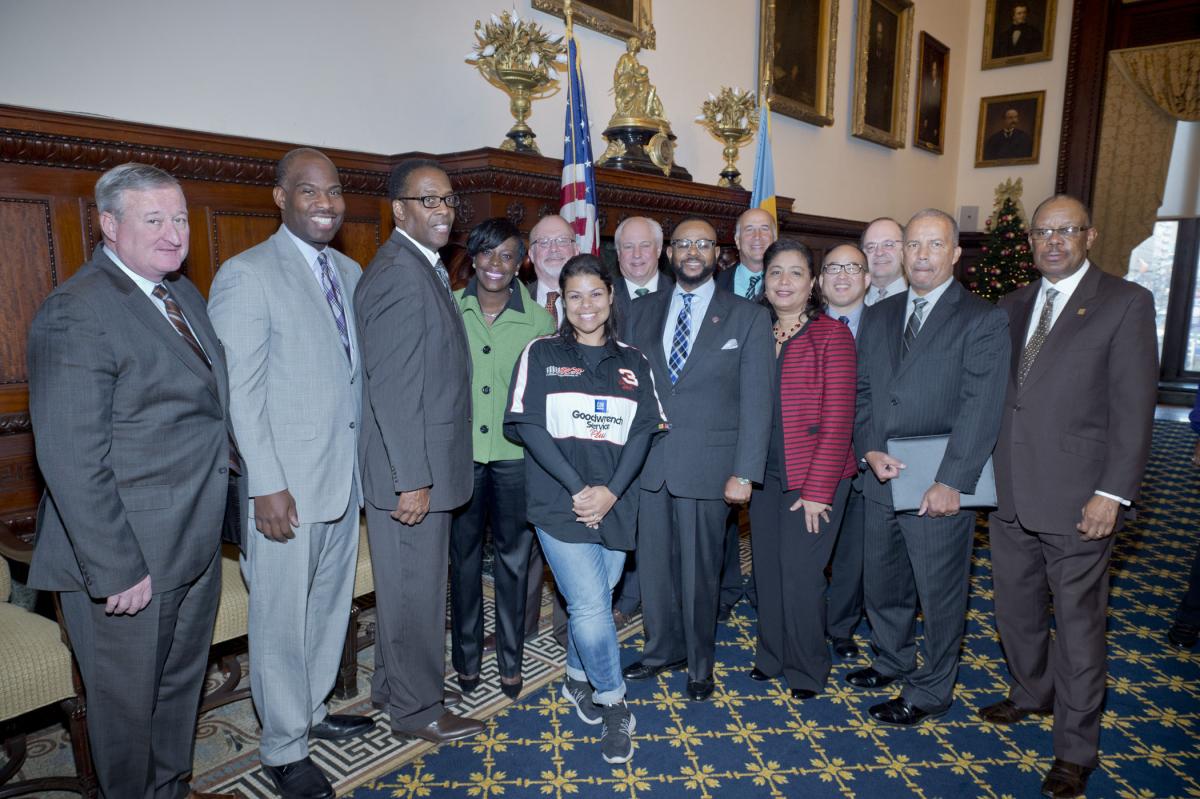
Council members join Mayor Jim Kenney (left) business owner Monica Parrilla (center), Community College of Philadelphia President Donald Guy Generals, (2nd left) and city Commerce Director Harold Epps (far right) to announce the launch of Power Up Your Business.

Monica Parrilla, owner of Marz Auto Center in Hunting Park, loves her job but sometimes the challenges can be difficult to bear.

Her four employees and their families rely on her and her auto repair business for their livelihood. She is working for her customers, and for them.

On Monday, Parrilla, clad in a Dale Earnhardt pullover shirt, breathed easier. Power Up Your Business, a new initiative funded by City Council and created by Community College of Philadelphia, aims to help her company grow, and the neighborhood along with it.

“There are workshops and grants for businesses with large revenue streams but small businesses like mine are excluded because we don’t meet the benchmark,” said Parrilla, who will serve as a member of the Power Up advisory board. “Small businesses have the power to keep the local economy moving, provide jobs in our area and to increase our revenue.”

From Hunting Park to Wynnefield, from Logan to South Philly, small businesses — the barbershops, the bodegas, the laundromats — throughout the city’s 265 neighborhood commercial corridors are the economic drivers of the city. Yet, those businesses are oftentimes overlooked in economic development conversations.

Power Up will help kick-start the conversation, block by block, and introduce the city to a group of unsung heroes — the men and women whose businesses keep neighborhoods and communities strong and who serve as job creators.

Starting Jan. 11, the College will offer workshops that cover the small business financial management, personal and business credit and neighborhood-based marketing. The workshops will be held at the College's Main Campus and three Regional Centers, starting with the Northwest Regional Center.

It will also offer 10-week training programs for up to 25 businesses at a time for a total of 100 businesses in one year. The College will match the participants with a business coach and introduce them to small business resources.

“At the end of the day, stronger local businesses mean more jobs and better neighborhoods for all Philadelphians, and I think we all can get behind that,” said Mayor Jim Kenney, who has advocated for opportunity for every resident of Philadelphia. “When neighborhood businesses are strong, neighborhoods are safer, home values go up, more people are working, there’s more of a community feel in the neighborhood.”

City Council hatched the idea and created funding for Power Up Your Business in response to the sweetened beverage tax imposed on small business owners earlier this year. “To me, consumption was driving the argument. Not enough was about ownership,” said Councilwoman Cherelle Parker, who shepherded the $800,000 program through the budget process. “With that in mind, we were able to come together about the development of the program.”

Standing alongside Mayor Kenney, Councilwoman Parker, and Community College of Philadelphia President Donald Guy Generals were: Council President Darrell Clarke, and Council members Curtis Jones, Jr., Maria Quiñones-Sánchez, Derek Green, William Greenlee, Mark Squilla, Allan Domb, Al Taubenberger and David Oh. Clarke lauded Community College of Philadelphia as the “go-to” College “we go to when we want to come up with some very specific programs.”

“The College has one simple goal,” Dr. Generals said, “make every neighborhood the best it can be, by helping every business prosper.”

PIDC, City Commerce Department, PACDC, Enterprise Center, the African American Chamber of Commerce, the Greater Philadelphia Chamber of Commerce, and the Greater Philadelphia Hispanic Chamber of Commerce are among the College’s community partners as Power Up prepares for a January rollout.

“It’s a neighborhood-centric approach to economic inclusion and change,” said Carol de Fries, the College’s vice president of Workforce and Economic Innovation.

Summary
Monica Parrilla, owner of Marz Auto Center in Hunting Park, loves her job but sometimes the challenges can be difficult …
Publish Date
Dec 7, 2016
Original nid
2451

A Blank Check, Paid With Sacrifice and Service


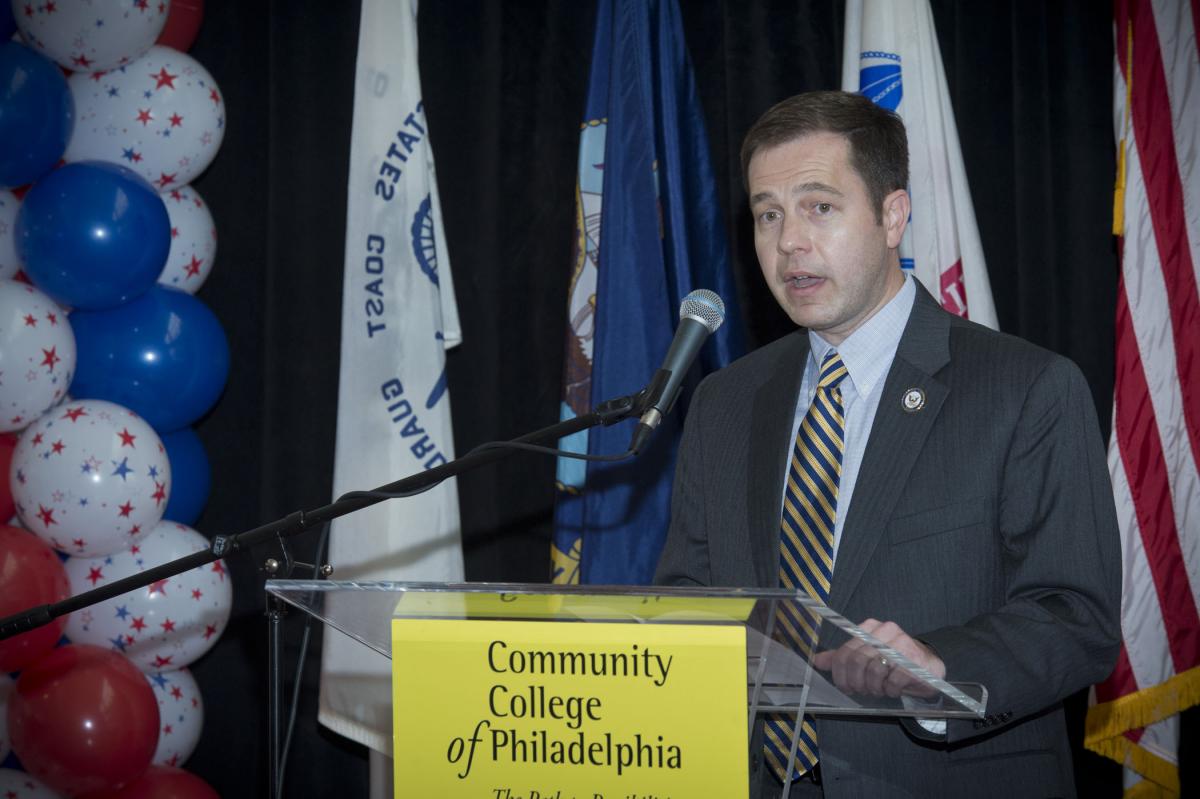
William A. Baas, vice president of Talent, Comcast Northeast Region, and a captain in the U.S. Navy Reserve, spoke of members of the military who make the ultimate sacrifice.

Veterans Day at Community College of Philadelphia was a time to remember heroes, a number of whom are sitting in the classrooms, and juggling kids and books.

About 75 students, faculty and staff gathered in the Allen T. Bonnell Building lobby for a solemn ceremony on Veterans Day that recalled fallen comrades and sacred duty. College President Donald Guy Generals praised all servicemen and women as protectors of freedom.

 “What is your definition of a veteran?”  William A. Baas, vice president of Talent, Comcast Northeast Region and currently a captain in the U.S. Navy Reserve. “Mine is simple. A veteran is that man or woman who raises his or her hand, swears an oath to the Constitution of the United States, and writes a blank check to the United States government for an untold amount, up to and including his or her life. Some cash it in and they get away pretty easily. For others, the amount they have paid is incalculable.”

Baas was joined during the ceremony by Angel Arocho, senior director of operations compliance at Comcast and a former U.S. Marine Corps sergeant who shared his personal journey of educational achievement; and Frederick Soejanto, a 2012 graduate of the College who serves as a medical logistics officer and, and who was recently promoted to Second Lieutenant in the U.S. Army. Stephen Bachovin, coordinator of Veterans /Military Programming at the Veterans Resource Center, served as emcee.

During the ceremony, the College unveiled a new scholarship for veterans established by Drizin-Weiss Post 215 Jewish War Veterans. The $1,000 scholarship will be awarded to a student veteran this spring.

After the ceremony, guests feasted on cake and then some of the veterans attended a post-ceremony lunch and a Comcast jobs fair on campus. Servicemen and women often have a hard time finding a job once they come out of the military. Approximately one out of every two post 9/11 veterans will face a period of unemployment while transitioning into the workforce.

So the Veterans Resource Center and workforce development staff teamed up with Comcast Corp. on a jobs fair designed to create an employment path.

The fair concluded a day full of Veterans Day events.

Summary
Veterans Day at Community College of Philadelphia was a time to remember heroes, a number of whom are sitting in the cla…
Publish Date
Nov 17, 2016
Original nid
2434

Balancing Needs: How One Professor Teaches Nurses How To Care For Themselves


Assistant Professor Lisa Johnson's research teaches nurses how to balance their own needs with the needs of their patients.

As part of their job description, registered nurses are expected to carry out emotionally-fraught tasks that most workers simply wouldn’t be able to handle. Treating bloody wounds, caring for the dying infants, consoling grieving families, and constantly adapting to unexpected life and death situations are just some of the stressful duties that nurses must perform on a regular basis.

But how do nurses preserve their own mental health after handling all of the responsibilities of the profession? How do they cope? Who can they talk to?

The truth is, RNs are trained to take care of everybody but themselves, according to Lisa Johnson, assistant professor of Nursing at Community College of Philadelphia. Johnson has done extensive doctoral research on the dichotomy that exists between RNs as caregivers and self-neglectors, which she says plenty of nurses are.

Her study, “Balancing Needs: Pediatric Nurses’ Experiences With Exposure to the Traumatic Events of Children,” presented in July at the 27th International Nursing Research Congress in Capetown, South Africa, bears this out and is advancing approaches to improve nurses’ work environments, self-care, job satisfaction and nurse retention and recruitment.

The turnover rate for bedside RNs increased to 17.2 percent in 2015, up from 16.4 percent in 2014, according to a 2016 report published by Nursing Solutions, Inc.

“Nursing school prepares you for trauma in a health-care setting, but it doesn’t teach you how to handle your own responses to it,” said Johnson, who is also an oncology nurse. .””Self-awareness is key because often times are emotions are contagious without us even realizing it. If I enter a room feeling stressed and anxious, many times it increases the stress and anxiety of those around me, even the youngest of children.”

Johnson’s work goes a long way in addressing the changing needs of a healthcare workforce that provides care in vulnerable communities, all while grappling with changing demographics and emergency situations ranging from extreme weather to mass shootings.

“It is critical that health care educators not only understand the changing health care environment of the future but also recognize that the students in their programs are not the same type of student that sat in classrooms 10 years ago or even five years ago, said Dr. Mary Anne Celenza, dean of the College’s Division of Math, Science and Health Careers. ”The diversity of this generation of new health care workers will not only bring different perspectives to health care, but will also bring more knowledge of cultural differences, greater interest in working in teams and reliance on social media as well as a greater desire to integrate their work into their personal time.”

Community College of Philadelphia, where Johnson works, is the only open-access public institution in the city. She works on a dedicated staff that is leading an effort to create a culturally competent pipeline of health-care workers for the region. Of the nursing students enrolled in the 2014-2015 academic year, approximately 42 percent were white, 33 percent were African American, 9 percent were Asian and 6.5 percent were Hispanic. Twenty-five percent were males.

Whether it be learning how to be aware of their trainees’ emotions, acknowledging them, practicing self-care, or preparing to work in culturally diverse neighborhoods, the nursing program, which has

graduated over 3,500 students since 1968, encourages staff to reflect on contemporary workplace challenges in an effort to prepare students for the issues –emotionally and technical- they eventually will face.

The Department of Nursing at the College just received a $350,000 Workforce Diversity Grant from the U.S. Health Resources and Services Administration (HRSA) to launch a program that will provide second-year nursing students from disadvantaged backgrounds an accelerated pathway to graduation. The primary objective is to increase the pipeline of nurses who have bachelor’s degrees within the City.

Together with the National Nursing Centers Consortium and West Chester University, the program will provide 14 students with mentoring, accelerated coursework, financial support and the opportunity to take as many as nine additional credits toward a bachelor’s degree. In addition, eligible students in both the first and second year of the program received resources such as books, software programs, and financial literacy training. Each of these resources is focused on helping students to succeed in the nursing program.

“The nursing program is committed to increasing diversity of the nursing workforce and addressing social determinants of health in vulnerable communities,” said Dr. Barbara N. McLaughlin, head of the Department of Nursing at the College. “The College draws together students from a wide range of ages and backgrounds and seeks to provide the programs and support they need to achieve their goals.”

In other news, the Department of Nursing at the College received its fourth consecutive designation as a Center of Excellence for creating environments that enhance student learning and professional development from the National League for Nursing. The designation is for the period 2016-2021. a

Summary
As part of their job description, registered nurses are expected to carry out emotionally-fraught tasks that most worker…
Publish Date
Nov 7, 2016
Original nid
2421

A Murder that Happened 145 Years Ago Rallies New Generations in Philly to Vote


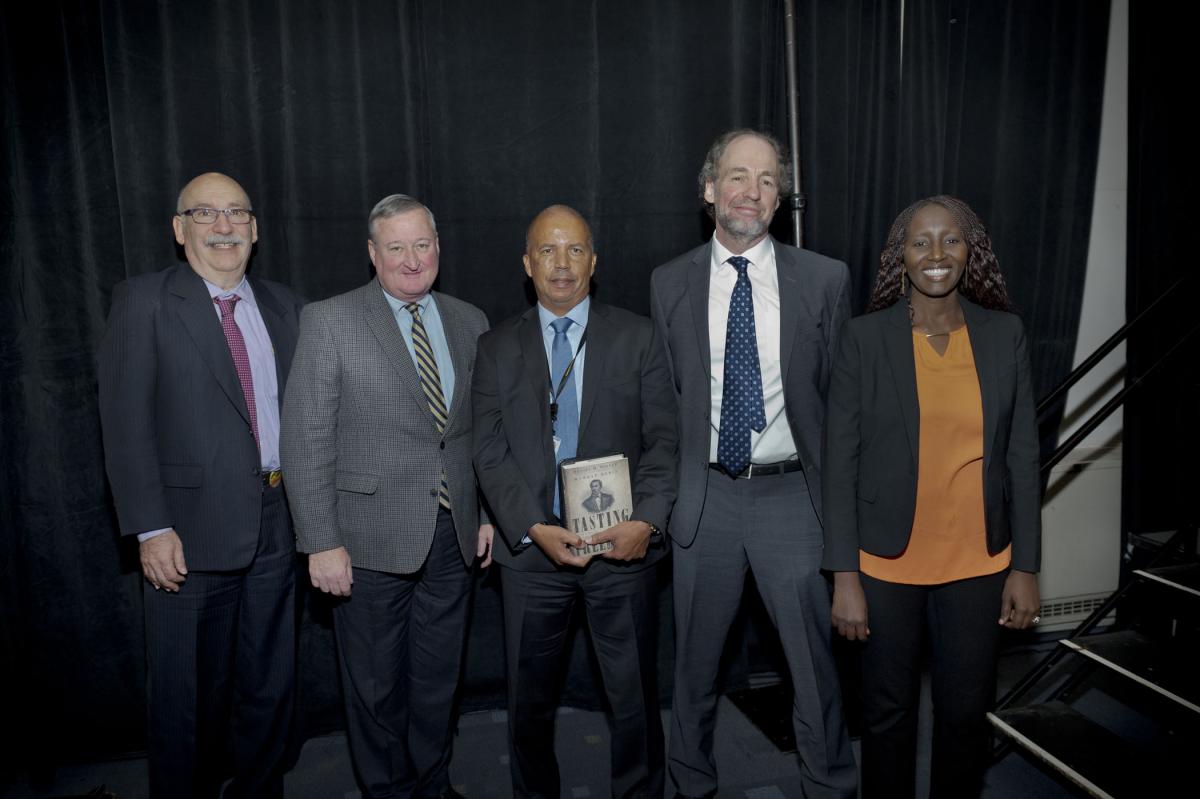
Murray Dubin, Mayor Jim Kenney, Dr. Donald Guy Generals, Daniel R. Biddle and Aminata Sy

African Americans' centuries-long battle for freedom has not been lost on Philadelphia Mayor Jim Kenney, an Irish Catholic who prides himself on knowing his city’s history.

On Tuesday, while praising the bravery and sacrifices of these past freedom fighters, Kenney made an observation that made the room fall silent: “In the end, this country will be saved again by African Americans Nov. 8,” the Democratic mayor told the crowd.

He, of course was referring to the presidential election, and to his hopes for the presumed defeat of Republican presidential candidate Donald Trump. His remarks came at an event hosted by Community College of Philadelphia on the final day to register to vote in Pennsylvania for the presidential election.

About 150 people gathered to honor one of those 19th century activists who Kenney loves to discuss when addressing the city’s history. Octavius V. Catto, an African-American educator, organizer and civil rights activist, was only 32 years old when he was murdered on Election Day in Philadelphia on October 10, 1871. African-American males had been able to vote that day, after the 15th Amendment to the Constitution restored their vote.

Though it has been 14 decades since Catto’s death, Kenney keeps an etching of him over his favorite work space in his office. “I want him looking over my shoulder to remind me what my responsibility is to the children and to all of the people of Philadelphia,” Kenney said.

The room was packed, with latecomers turned away, as a panel delved into Catto’s life, and its lasting impact on the city today. “Black history was systematically ripped from the pages of history on purpose,” Kenney said. “I’m a white kid growing up in South Philly in the 60s and 70s. Do you think anybody is going to tell me about African-American history? No, because they thought it wasn’t in anybody’s best interest to tell me.”

The city plans to rectify that oversight this spring with the unveiling of a memorial statue dedicated to Catto that will be placed on the southwest apron of City Hall — the first African American individual so honored. The Mayor’s decade-long push for the memorial will ensure that the conversation Catto started so long ago will be continued.

Mayor Kenney was joined on the panel by Dr. Donald Guy Generals, president of the College; and two of Catto’s most prominent biographers, Daniel R. Biddle and Murray Dubin, authors of “Tasting Freedom: Octavius Catto and the Battle for Equality in Civil War America.” Aminata Sy, a graduate of the College who now attends the University of

Pennsylvania, moderated the discussion into how the past informs the present: Biddle and Dubin shared stories of Catto’s bravery and achievements while Dr. Generals and Kenney reflected on how far we’ve come, and the distance yet to go.

Both Kenney and Dr. Generals believe Catto would be disappointed that the nation has not made public education its top priority. The mayor said he is working to provide access to quality education for all with the establishment of pre-K and community schools.

Biddle recounted how African Americans, under threat of their lives, pushed through expansion of equal rights, none of which was more important than the right to vote, because “all the rhetoric turned from mere words to political power,” Biddle said, “and the people who lost power in that equation weren’t going to give up without a fight.”

Even today, in an incendiary election year said, states such as Ohio have attempted to enforce laws that strip away the right to vote for African Americans Dr. Generals said. The president made a direct appeal to the young people in the audience to register and vote as a way to pursue social justice, reminding them that it was the leadership of youth — Martin Luther King, Medgar Evers, Malcolm X, and O.V. Catto — that stung the collective consciousness for civil rights in America. And many young people flocked to the online registration table.

“You can’t underestimate the importance of getting out to vote,” Dr. Generals said. “O.V. Catto lost his life for that very thing. Democracy is born out of the struggle of African Americans, and the major part of it happened in Philadelphia.”

Summary
African Americans' centuries-long battle for freedom has not been lost on Philadelphia Mayor Jim Kenney, an Irish Cathol…
Publish Date
Oct 14, 2016
Original nid
2368

A Learning Community Gathers to Prepare for Its Students


As Community College of Philadelphia prepared for the 2016-2017 academic year, it placed the focus on learning — by faculty and staff — to develop collaborative networks to guide more students toward their academic and career goals.

The College is entering into its first full academic year of implementing the highly-touted Guided Pathways model to scale, and yesterday Dr. Rob Johnstone, one of the nation’s foremost authorities, sought to demystify the concept by offering four streamlined principles.

“Have a structure. Help students get in a (career and academic) program earlier. Make sure they’re making progress. And keep the focus on learning,” suggested Dr. Johnstone, founder and president of the Bay Area-based National Center for Inquiry & Improvement, which works with two- and four-year institutions to create structures and processes that increase student completion, learning and labor market outcomes. “If you do all four of those things at scale, you will see what’s possible.”

On Sept. 6, the College will welcome thousands of new students who will begin their journey with more personalized services and, eventually, curriculum mapping. They, as well as many returning students, will be beneficiaries of a growing field of support practices birthed as part of the Guided Pathways movement. Among the major changes this year, the College hired seven new full-time faculty advisors to help new students map out more direct paths to graduation, transfer or certificate completion.

In 2015, the College was one of 30 community colleges invited to join the Pathways Project led by the American Association of Community Colleges (AACC).The groundbreaking national initiative will implement guided academic and career pathways at scale — for all students.

This initiative reinforces ongoing efforts to create a holistic, streamlined educational approach to learning and student services, which seek to help students circumvent barriers and obstacles. In the past, Johnstone said, many institutions operated under a cafeteria model, where students got to pick and choose from dozens of course offerings, but were paralyzed by the dizzying array of choicest.

Dr. Johnston asked the capacity crowd in the Winnet Student Life Building’s Great Hall to do an interactive exercise, by which they created a word cloud through text messaging to describe what they thought would be the mindset of new community college students. “Excited,” “scared,” “unsure,” “nervous” and “confused” were some of the adjectives that emerged.

“It doesn’t have to be that way,” Dr. Johnstone said, adding that students need deep connections with professors or other academic mentors who are invested in their success; a cohort of peer support, and an established curriculum that paves out a goal, whether it be academic or career-focused. They need coaching, much like athletes, who are more likely to take advantage of extra supports they are offered.

In this new guided pathways system, faculty and staff have to become “change experts”, Dr. Johnstone added, to help students achieve, and sometimes, adjust their academic goals. As an example, he cited nursing programs that have limited space available in each new class, yet thousands of students trying to enter on the pre-nursing career path. He recommended honest

and difficult conversations with those students who are not likely to meet the academic requirements for admission.

At the College, specially trained allied health counselors are available to help students select a nursing or allied health career for which they meet the academic requirements. These counselors hold information sessions to familiarize potential applicants to the select nursing and allied health programs, according to Dr. Barbara McLaughlin, chair of the College’s Department of Nursing.

In his remarks, President Donald Guy Generals noted social justice issues and challenges also may present a barrier to degree attainment. Amid the growing chorus of national discontent, faculty should be prepared to discuss those issues in classrooms, he said.

From their inception, community colleges were founded on the principles of social justice — as open access to education democratized higher education, which, at one time, primarily served the wealthy.

“The idea of community colleges taking the lead on issues of social justice, “clearly articulates the importance of education as it relates to the democracy of our nation,” Dr. Generals said. “We have to be mindful. If we can’t make the issues of social justice and racism go away, then the rest of the world is going to struggle.”

Summary
As Community College of Philadelphia prepared for the 2016-2017 academic year, it placed the focus on learning — b…
Publish Date
Aug 30, 2016
Original nid
2334

Subscribe to